Learn how to design a corporate travel program that reduces costs without compromising traveler satisfaction, compliance, or safety. Discover the four foundational features every modern travel program needs.

Corporate travel is a necessary part of doing business, but managing it effectively can be a challenge. Without the right approach, travel expenses can spiral out of control, leaving your budget stretched and your team frustrated.
The solution lies in building a smarter travel program—one that combines modern tools, clear policies, and strategic planning to reduce costs while keeping employees productive and happy on the road.
In this article, we’ll break down four essential features of a cost-saving travel program and share practical steps to help you take control of your travel budget.
4 Key Cost-Saving Features
When it comes to business travel, cost saving is not only about cheaper fares or negotiated rates. Depending on which business travel program you choose, you have several levers to pull to make your travel budget stretch further.
For most modern travel management platforms, you'll find options to consolidate bookings and manage expenses, policies, and compliance in one platform.

Track your travel expenses and booking behavior
Real time data and detailed reporting tools can help you analyze spending trends to find further savings. Look for a system that look at not just your spend, but also booking behavior. This way, you can tailor policies to nudge your travelers in the right direction when booking. For example, if trips are often booked within a week of departure, you can unlock significant savings by enforcing advance-booking policies, giving travelers access to more options and better prices.

Look for a broad selection of travel content, including NDC and LCC
NDC: If you’re looking to reduce your travel costs, you need the biggest selection of flights, hotels, trains and cars at the lowest rates. The trick here is to select a travel management tool that is using “NDC” (New Distribution Capability). If you’re not familiar with NDC, it’s a way for airlines to offer more personalized and dynamic fare options, as opposed to “GDS” (Global Distribution System) which is a more centralized system that benefits travel agencies as opposed to end-users.LCC: Additionally, to maximize your savings, you’ll want access to a wide range of travel options, including LCCs (LowCost Carriers) such as Ryanair, EasyJet, WizzAir, and others. Today, LCCs account for about 30% of all airline seats, so without access to these carriers, you could miss out on many attractive rates and options.


Flexible policies and dynamic controls
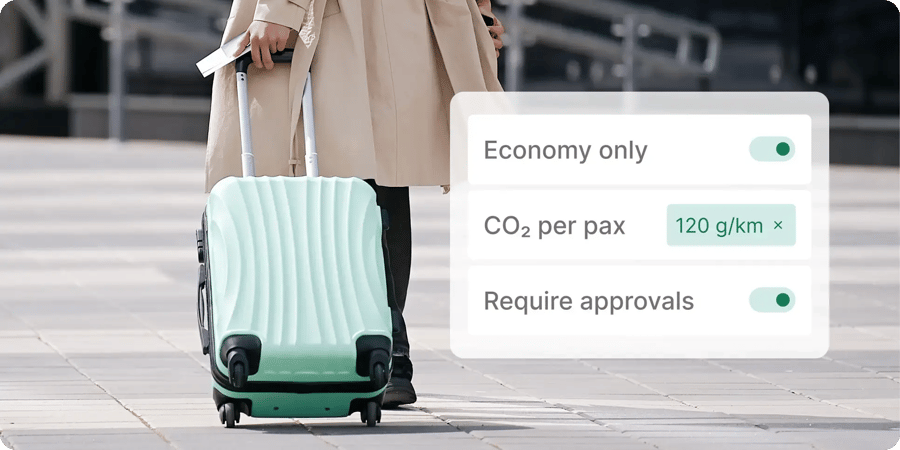
Static travel policies often lead to unnecessary expenses by failing to adapt to the realities of modern business travel. Flexible policies, however, are a cost-saving powerhouse, offering businesses the ability to control budgets while accommodating changing needs.
With flexible policies, you can:
- Enforce Advance Booking: Require longer booking windows for long-haul flights to secure lower fares, while allowing exceptions for urgent trips.
- Reduce Change Fees: Opt for refundable bookings and flexible travel options to avoid costly penalties when plans shift.
- Automate Cost Controls: Use travel management systems to guide employees toward in-policy, cost-effective options automatically.
- Optimize Travel Classes: Base flight class on trip duration rather than job title, ensuring comfort without overspending.
- By combining structure with adaptability, flexible policies help businesses cut costs, improve compliance, and create a travel program that works for both the company and its employees.


Consolidate bookings and expenses in one platform
Managing travel and expenses across multiple systems can lead to inefficiencies, errors, and hidden costs. Consolidating bookings and expenses into one platform eliminates these issues, providing businesses with significant cost-saving opportunities.
Here’s how an all-in-one platform drives savings:
Eliminates Manual Data Entry: Automating the travel and expense (T&E) workflow reduces administrative hours spent on manual processes, freeing up time for higher-value tasks.Real-Time Spend Visibility: Gain instant insights into travel expenses, allowing you to identify overspending and adjust policies proactively.
Improves Policy Compliance: Integrated platforms guide employees to book in-policy options, reducing out-of-policy expenses and ensuring better control over budgets.
Streamlines Reimbursements: Automated expense tracking and reimbursement processes cut down on delays and errors, saving both time and money.
Leverages Negotiated Rates: Centralized booking ensures employees consistently access pre-negotiated rates, maximizing savings on flights, hotels, and car rentals.
Top solutions, like Goodwings, automate the entire T&E workflow, typically reducing processing time, improving efficiency, and delivering measurable cost savings. By consolidating everything into one platform, businesses can simplify operations, enhance compliance, and unlock significant financial benefits.